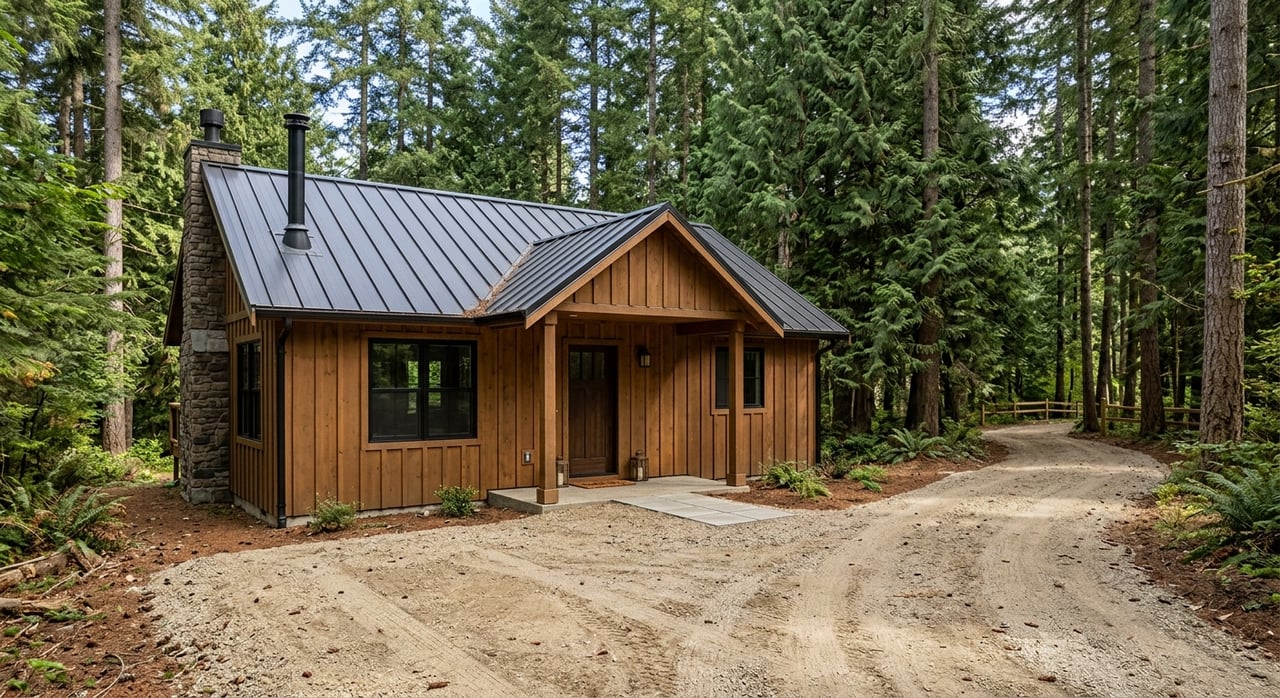
Priest River Investment Properties: Cabins, Land & Rentals
March 26, 2026
March 26, 2026
Picture a quiet basecamp with easy access to Priest Lake, the Pend Oreille, and Schweitzer, but without resort-town sticker shock. If you’re weighing a cabin, raw land, or a small rental in Priest River, you’re not alone. The area offers a lower entry price than nearby hubs and a lifestyle many visitors return for year after year. In this guide, you’ll learn what drives rental demand, how short-term rental rules work, what to check on land and utilities, and how to size returns. Let’s dive in.
Priest River is a small, four-season service center framed by steady but modest growth and a limited housing supply. The city’s latest planning data describes it as a gateway to lakes, rivers, and mountains with infrastructure that supports a compact community core. You can review the city’s current conditions in the comprehensive plan update materials for local context and growth trends. City of Priest River planning data offers a helpful snapshot.
Compared with Sandpoint or Coeur d’Alene, Priest River is commonly marketed as a quieter, more affordable base for outdoor access. Local development and visitor groups highlight proximity to Priest Lake and Schweitzer as demand drivers for both visitors and second-home owners.
Recent market summaries place the median home price in the Priest River area around $499,000. That is often lower than prime Sandpoint submarkets, though pricing varies by location, waterfront, and condition. Always check the most current MLS data before you run numbers.
Summer is the main revenue window. Day-use and overnight traffic tied to Priest Lake, river access, and regional recreation usually lift bookings from late spring through early fall, with a July peak. Winter brings ski and holiday stays, but mid-winter demand is typically thinner away from the slopes.
Market-level short-term rental data points to moderate occupancy and mid-range nightly rates. AirDNA’s Priest River snapshot shows directional medians around $20,000 in annual revenue per active listing, an average daily rate near $300 to $350, and occupancy in the mid-40 percent range. Treat these as a baseline for pro formas, not a promise. Your outcome will depend on location, size, design, and management.
The implication is straightforward: price your peak season aggressively but plan conservatively for shoulder months and winter. For cabins or waterfront properties, weekly summer bookings often drive the topline. For in-town small rentals, year-round demand is steadier but thinner, so underwriting should lean on long-term or mid-term scenarios.
Idaho treats short-term rentals as a residential land use and limits local bans. In May 2025, the Idaho Supreme Court affirmed that interpretation in Idaho Association of Realtors v. City of Lava Hot Springs, striking down rules that effectively excluded non-owner-occupied STRs in residential zones. You can read the opinion for the governing standard on “reasonable” safety and welfare regulations. See the Idaho Supreme Court decision.
Local practice still matters. Bonner County has increased tracking and enforcement around rentals, signaling closer attention to compliance. Local reporting details new county tools for identifying and monitoring rentals.
Inside Priest River city limits, the municipal code requires business registration for operations domiciled in the city, and the city maintains zoning and flood control rules that affect buildability and permitted uses. Before you list a unit, verify whether a business registration, safety checks, or inspections apply. Review the city’s business registration code language and confirm any current requirements with City Hall.
Use this quick comparison to choose a path that matches your budget, timeline, and operating plan.
| Property type | Build and permitting | Seasonality and demand | Likely renter or guest | Upfront infrastructure |
|---|---|---|---|---|
| Cabin near water or woods | Standard residential permitting, plus STR business registration if applicable; check floodplain and shoreline limits early | Strong summer and shoulder-season demand; winter moderate unless ski-adjacent | Vacationers and small groups seeking lake and trail access | If outside services: well and septic, driveway, possible flood mitigation; plan for snow removal |
| Raw land or off-grid acreage | Zoning and lot standards, site plan, well and septic approvals; shoreline or floodplain rules may apply | Depends on final product; STR only after a dwelling is built and permitted | Future owner-occupant or renter once developed | Well drilling timelines and variable costs; septic design and install; road access and power setup |
| In-town small rental or duplex | City zoning and dimensional standards; confirm minimum lot size before subdividing or adding units | More stable year-round demand for long-term or mid-term leases; limited STR seasonality | Local workforce, commuters, or medium-stay visitors | City water/sewer hookups reduce upfront cost and complexity |
Tip: If you plan to subdivide a larger in-town parcel for multiple small units, confirm dimensional standards early. Public hearing materials show the R-2 zone using a 6,000 square foot minimum lot size for certain projects, which can influence what you can build. See an example notice referencing R-2 standards.
Start with zoning and overlays. Within city limits, your use and density will follow the municipal zoning code and any overlays. Outside the city, county planning and health districts guide septic and land use approvals. A quick planning call can save months later.
Evaluate flood hazards early. River-adjacent parcels often intersect with flood hazard areas, wetlands, or shoreline protections. Priest River’s code includes flood damage prevention rules, and waterfront work can require state or federal permits. Pull FEMA FIRM panels and review the city’s requirements. Read Priest River’s flood control provisions.
Confirm water and wastewater. Many rural parcels require private wells and onsite wastewater systems. Idaho regulates drilling and reporting, and timelines and costs vary by depth and geology. Budget a few weeks and a few thousand dollars for well drilling, with possible totals in the low thousands to around $10,000 depending on conditions. Use this Idaho well owner guide as a starting point. In town, city water and sewer reduce complexity and can make small multi-unit plans more feasible.
Plan for access and winter maintenance. Primary access relies on U.S. Highway 2 and State Highway 57, which are maintained year-round. Remote forest roads and long driveways can add plowing and stabilization costs. Build conservative winter line items into your operating budget for cabins not on maintained streets. The city’s planning data offers helpful context on transportation and seasonal conditions. Review the city’s existing conditions report.
There are two common profiles in small markets like Priest River.
Long-term rentals. These tend to offer steadier occupancy and lower turnover. In many secondary markets, investors target cap rates in the 5 to 8 percent range, depending on price, rent, and condition. That spread compensates for lower liquidity and slower appreciation potential compared with major metros. See this primer on cap rates in secondary markets.
Short-term rentals. STRs can produce higher summer ADRs but come with more variability and higher operating costs. AirDNA’s directional metrics for Priest River show median annual revenue near $20,000 per listing with ADRs roughly $300 to $350 and occupancy near the mid-40 percent range. Build scenarios with realistic cleaning, management, utilities, supplies, platform fees, and a healthy capital reserve.
The takeaway: Underwrite with conservative occupancy for the off-season and stress test for a slower shoulder season. Consider a blended approach where a cabin flexes between STR in summer and mid-term stays in winter.
Work through these steps before you buy.
Confirm use and permits. Call Priest River City Hall and Bonner County Planning to confirm zoning, permitted uses, and whether STRs require a business registration or inspections. Start with the city’s code reference for business registration.
Check floodplain and shoreline. Pull FEMA FIRM panels, review the city’s flood damage prevention rules, and ask the county for floodplain resources. Elevation certificates, foundation choices, and possible permits can affect costs. Read the city’s flood provisions here.
Verify wells and septic. If outside city utilities, confirm well permits and septic paths, then get quotes for drilling and system design. This Idaho well owner guide outlines the basics.
Model STR performance. Use market data to estimate ADR and occupancy by month, not just annual averages. AirDNA’s Priest River overview can help with comps.
Track legal updates. State law limits local STR prohibitions, and a 2025 Idaho Supreme Court case reinforced that standard. Local enforcement and registration rules can still change. Read the court’s opinion for context and monitor local updates, including county enforcement attention. Here is a local report on new tracking tools.
Build three scenarios. Create a long-term baseline, an STR base case, and a downside case with thinner shoulder months and higher CapEx. Size your reserve for roofs, decks, driveways, and snow equipment.
Confirm lot standards. If you plan multiple units, verify zoning, minimum lot size, and subdivision feasibility. R-2 materials reference a 6,000 square foot minimum lot size in example projects, which affects lot splits. See the example notice here.
If you want a lower-cost entry point near North Idaho’s marquee recreation, Priest River deserves a close look. The playbook is simple: buy quality, underwrite the off-season, check utilities and floodplain early, and stay aligned with current STR rules. With the right property and a conservative plan, you can balance lifestyle use with steady returns.
Have questions or want local comps, on-the-ground insight, and introductions to lenders, builders, and property managers? Reach out to Chris Briner to map the options and run the numbers together.
Stay up to date on the latest real estate trends.


Buying or selling a home is a journey that deserves attentive guidance, thoughtful care, and seasoned expertise. Chris Briner is dedicated to providing each client with the confidence and support needed to navigate Coeur d'Alene and Hayden’s dynamic real estate market.