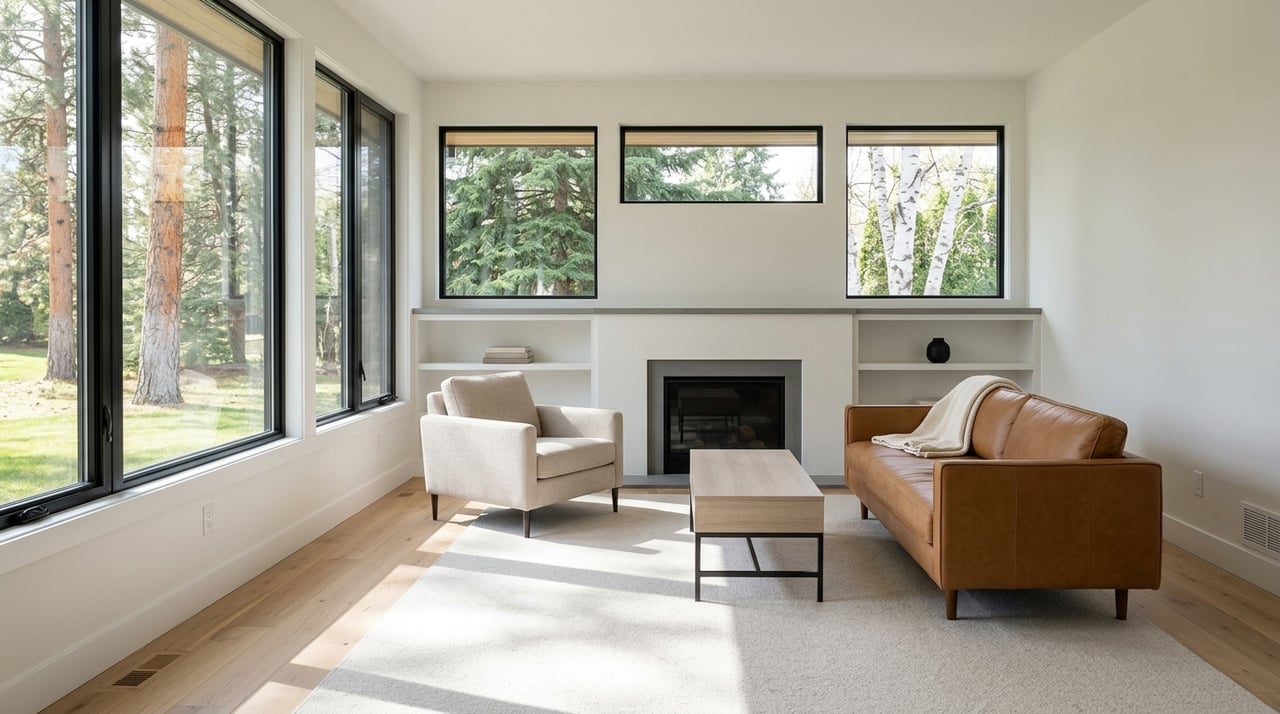
Post Falls Neighborhoods Guide to Established vs New Builds
Chris Briner May 14, 2026
Chris Briner May 14, 2026
Wondering whether an older part of Post Falls or a newer subdivision is the better fit for your next move? You are not alone. In a city that keeps growing and adding housing, the choice is less about right or wrong and more about how you want to live day to day. If you are weighing character against convenience, lot feel against turnkey condition, or central access against a more planned layout, this guide will help you compare both options with confidence. Let’s dive in.
Post Falls is in an active growth phase, and the city is updating its comprehensive plan alongside a housing needs assessment and fiscal impact analysis. That matters because your neighborhood choice is tied to how the city is changing right now, not just how it looked years ago.
Recent local data shows an estimated 2024 population of 45,800, with a 64.1% owner-occupied housing rate. The median owner-occupied home value is reported at $477,400, and the city’s 2025 housing study places the median home value at about $500,000.
Post Falls also has a relatively modern housing stock compared with many other cities. In the 83854 area, the median year built is 1999. About 24% of homes were built in 2010 to 2019, 23% in 2000 to 2009, 19% in 1990 to 1999, and only 8% were built before 1970.
That mix is what makes the established-versus-new-build conversation so useful here. You can still find older in-town areas with a more traditional street pattern, but much of the city’s inventory is already newer and often part of a planned subdivision environment.
In Post Falls, established neighborhoods generally refer to older areas tied more closely to the city’s original layout. The city’s comprehensive plan describes older neighborhoods as pre-freeway areas that extend the grid and connect more directly to the historic city core.
That does not mean every older street looks the same. It does mean these areas often feel more connected to the city’s earlier development pattern rather than a newer subdivision design.
If you want a neighborhood that feels less uniform, established areas may appeal to you. Older parts of Post Falls can offer a more varied street layout, a sense of connection to the city center, and homes that may have more room for updates or personalization.
For some buyers, that flexibility is a big plus. If you enjoy the idea of making a home your own over time, an older property may offer more opportunities for that than a newer, more turnkey home.
The biggest tradeoff is usually maintenance. Because much of Post Falls housing was built after 1990, homes on the older end of the spectrum are more likely to raise questions about major systems and updates.
As you compare options, pay close attention to roof age, windows, HVAC, plumbing, and cosmetic condition. These are not automatic problems, but they are smart areas to review carefully in older homes.
There is also a practical streetscape issue to consider. The city notes that some older neighborhoods may lack curb, gutter, and sidewalk, which can affect the day-to-day feel of the area.
In Post Falls, newer neighborhoods are often built as planned subdivisions rather than extensions of a historic street grid. The city’s comprehensive plan describes many newer areas as more isolated subdivisions within square-mile sections, and it also notes denser master-planned housing near the river.
In practical terms, that often means a more coordinated neighborhood layout. You may see more consistency in home styles, lot patterns, and shared spaces.
One of the clearest advantages of newer construction in Post Falls is fewer immediate repair projects. The city’s housing analysis specifically notes that the relatively modern housing stock reduces the immediate need for major renovations or upgrades.
If you want a more turnkey starting point, a newer home can be appealing. You may spend less time thinking about deferred maintenance and more time settling into the home itself.
Newer neighborhoods can also feel more predictable from one block to the next. That works well for buyers who value a more planned environment and a consistent neighborhood appearance.
Not every new build sits on a small lot, but lot size is still worth watching closely. Post Falls zoning allows a range of residential patterns, including compact districts with lot sizes in roughly the 2,000 to 4,000 square foot range.
That means some newer neighborhoods may feel tighter and more uniform than many established areas. If outdoor space, distance between homes, or a less standardized feel matters to you, lot dimensions should be part of your comparison.
Many newer Post Falls developments include shared common areas and coordinated maintenance. The city’s planned unit development criteria require integrated streets, pedestrian and bicycle circulation, at least 10% open space, and a funding mechanism for common areas that are not publicly maintained.
For you as a buyer, that usually means one thing: read HOA documents carefully. Dues, rules, reserve planning, and maintenance responsibilities can shape both your monthly budget and your daily experience.
Some buyers appreciate having more predictable neighborhood standards and less personal maintenance. Others would rather avoid dues or restrictions. Neither approach is better across the board, but it is important to know exactly what you are agreeing to before you buy.
Neighborhood choice in Post Falls is not just about the house. It is also about how you move through your day.
Post Falls sits between Coeur d’Alene and Spokane along the I-90 corridor, and local transportation planning shows ongoing work along Spokane Street as well as projects in the I-90 and SH-41 corridors. Public transit also extends into Post Falls through CityLink.
The city’s housing study says 61% of residents and 62% of workers have commutes under 10 miles. At the same time, Census Reporter shows a mean travel time to work of 24.1 minutes.
That gap is a good reminder that a neighborhood can look close on a map but function differently in real life. A home near major corridors may make regional travel easier, while an older in-town location may feel more central for local errands and shorter local drives.
If you are deciding between the two, focus on the factors that affect your life the most. In Post Falls, the best fit usually comes down to maintenance tolerance, lot size, commute patterns, and whether you prefer the older city core or a newer subdivision setting.
Here is a simple side-by-side view:
| Factor | Established Areas | New Builds |
|---|---|---|
| Street pattern | More tied to older city grid | More planned subdivision layout |
| Home condition | May need more updates or repairs | Often more turnkey |
| Neighborhood feel | Less uniform, more variation | More standardized |
| Streetscape | May lack curb, gutter, or sidewalk | Often built with coordinated infrastructure |
| Lot patterns | Can feel less compact and less consistent | Can include tighter lot sizes |
| HOA presence | Varies | More common in planned developments |
This table is a starting point, not a rulebook. The right home always comes down to the specific property, the specific neighborhood, and what matters most to you.
As you tour homes in Post Falls, keep these questions in mind:
These questions can quickly clarify whether a home only looks good on paper or truly fits your lifestyle. They also help you compare homes more fairly across very different parts of Post Falls.
If you value a more traditional street pattern, older character, and proximity to the historic core, an established area may be worth a closer look. If you prefer newer systems, fewer immediate projects, and a more planned neighborhood environment, a new build may feel like the better match.
In Post Falls, neither option is automatically better. The smarter move is to match the neighborhood to your priorities, your budget, and how you want your daily routine to work.
Trying to decide between an established Post Falls neighborhood and a newer subdivision? Contact Chris Briner for local guidance on neighborhoods, home condition, commute, and lifestyle fit.
Stay up to date on the latest real estate trends.


Buying or selling a home is a journey that deserves attentive guidance, thoughtful care, and seasoned expertise. Chris Briner is dedicated to providing each client with the confidence and support needed to navigate Coeur d'Alene and Hayden’s dynamic real estate market.